A Sense of Place in a Time of Crisis: Lessons for Independent Schools
The COVID-19 pandemic reminds us to cherish the unique physical spaces provided at independent schools.
Independent schools have worked hard to adapt their campuses to national COVID-19 guidelines by limiting the capacity of classrooms, residence halls, and dining halls, and, more often than not, forsaking the physical campus entirely for virtual classrooms. While it is likely that digital spaces and video conferencing will change the learning and mentoring process for the foreseeable future, it remains clear that a genuine feeling of community, inherent in a physical presence, is critical for a healthy education. According to the National Association of Independent School’s 2020 Student Resilience Survey, schools that have the lowest levels of depression among their student body during the beginning of the pandemic were those that placed a greater emphasis on fostering community. Mary Liscinsky, the Dean of Student Life and COVID-19 Coordinator at the Loomis Chaffee School, sees firsthand how the independent school’s physical environment is and always has been crucial to student growth. “These schools are not built to be empty,” she says. “They are built to bring students together in all these beautiful settings.”
What role will our independent school environments play in supporting growth and bolstering community once students and faculty are again able to safely interact in close proximity? As architects with deep experience designing independent school settings, we have long recognized the importance of built environments that make independent schools unique in nurturing the development of the students who attend them. Before the pandemic, fostering a sense of community among students and faculty was in large part an architectural and campus planning challenge. The Loomis Chaffee School, an independent day and boarding high school located on 300 acres in Windsor, Connecticut, shows how independent schools are in a special position to embrace the design of their physical environments and strengthen their campus’s ‘sense of place’ as a tool for recovery and growth in a post-COVID world.
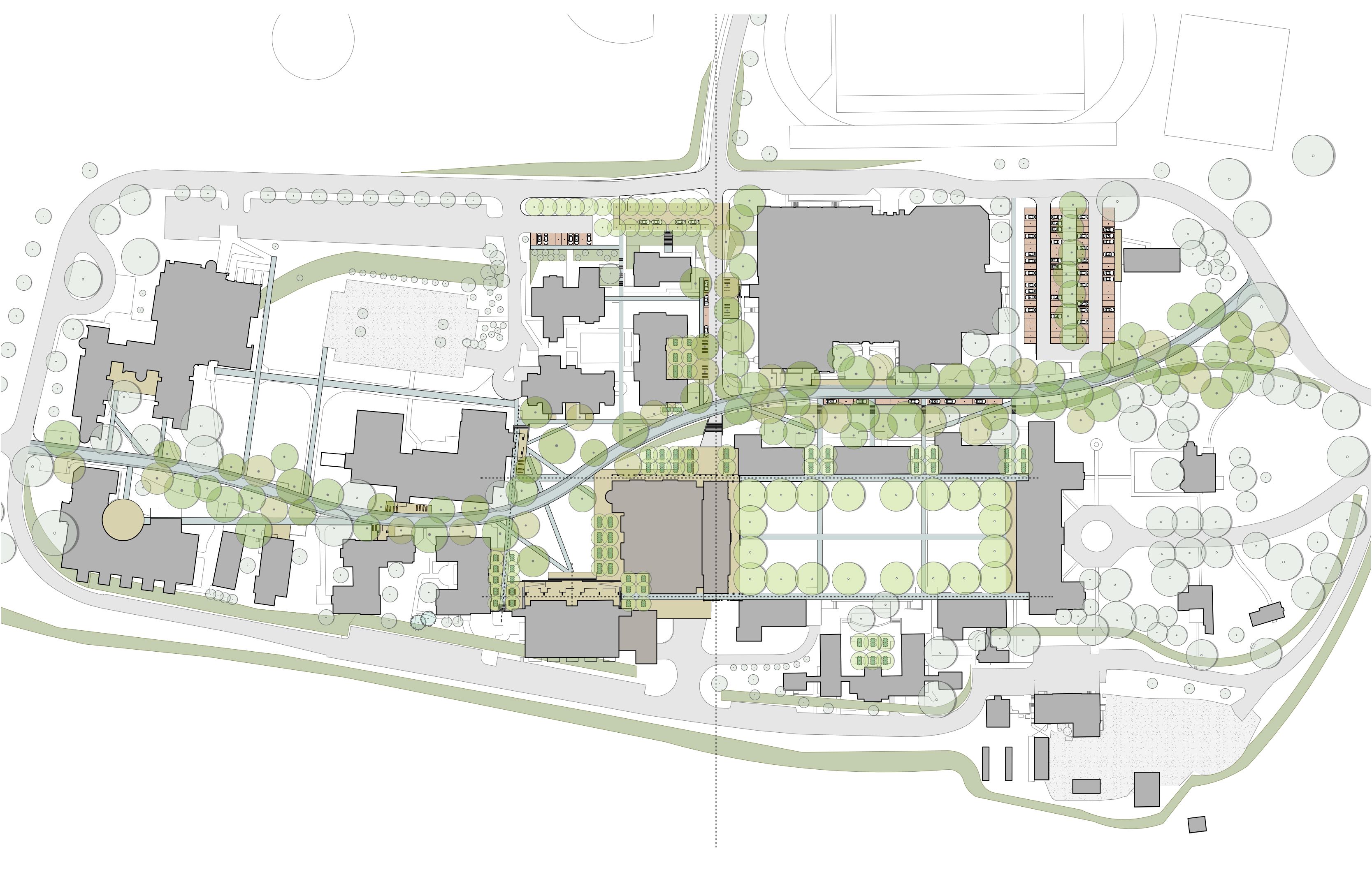
Campus plan of the Loomis Chaffee School, an independent day and boarding high school located on 300 acres in Windsor, Connecticut.
Defining a Sense of Place
Sam Olshin, FAIA, Principal at Atkin Olshin Schade Architects, leads the design effort for new campus buildings and renovations – such as the recently completed Scanlan Campus Center at the Loomis Chaffee School – to craft an intentional sense of place. A sense of place, according to Olshin, is “the intrinsic qualities of a particular locale – built or natural – that is site specific, and that responds to its context in a distinct and unique way.” While it has become widely agreed that in-person learning environments offer students opportunities for connection and interaction that digital environments cannot, Olshin believes that campuses with finely crafted buildings and landscapes can provide something even more. “In an era where there is much homogeneity in architecture,” he says, “we need spaces and landscapes that lift the human spirit and that are unique, energizing, and transformative.” The Scanlan Campus Center – which houses a dining center, student lounge space, and the Pearse Hub for Innovation – offers a sensitive mix of traditional and contemporary design.
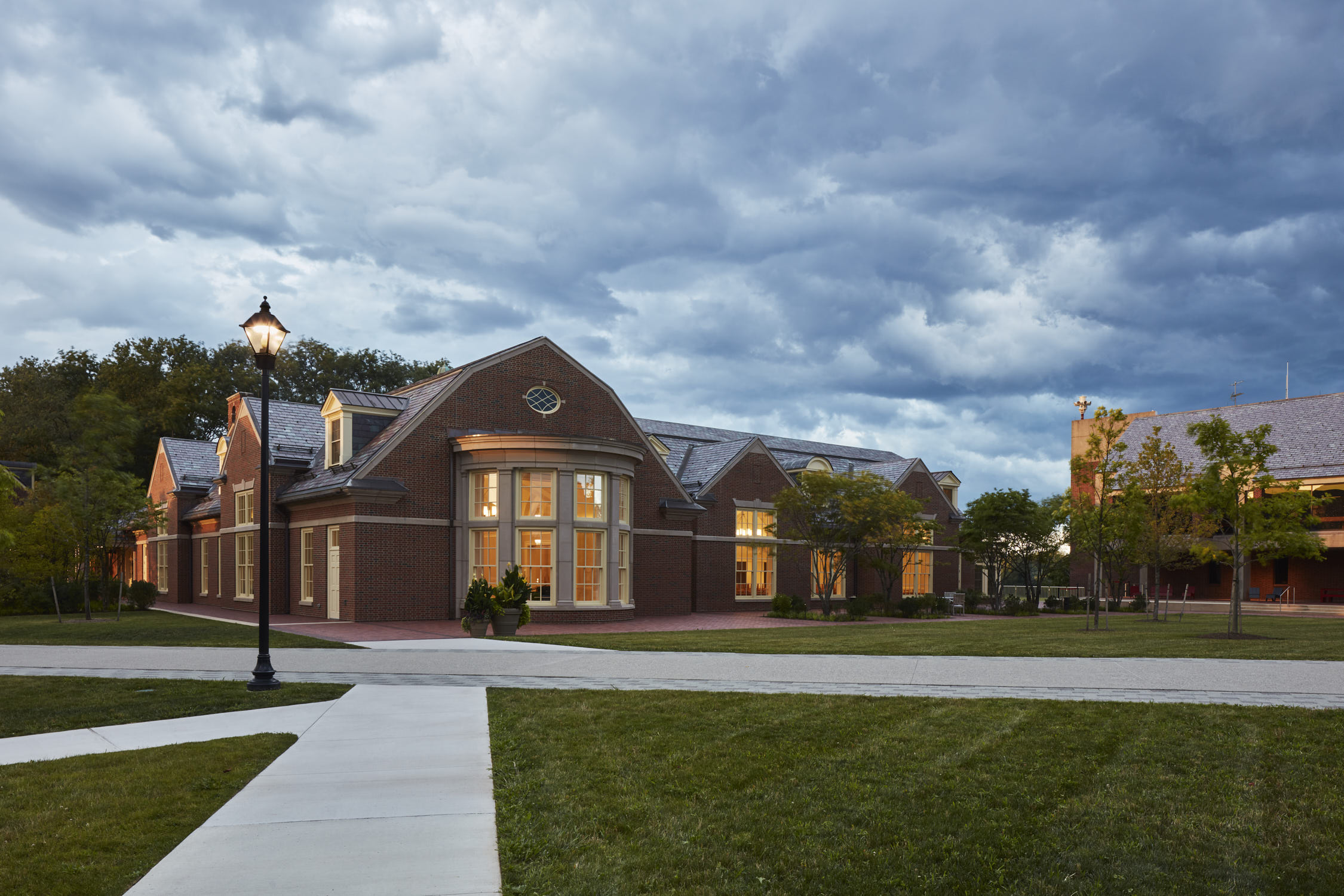
The Scanlan Campus Center at the Loomis Chaffee School supports and perpetuates the sense of place created on campus.
Making Legible an Institution’s Traditions
The history of the Loomis Chaffee School’s campus dates to the early 1900’s when New York architects Murphy & Dana laid out a series of Georgian Revival structures to serve local students seven miles outside of Hartford, Connecticut. The architects specifically worked in a style and chose building materials that were evocative of Independence Hall in Philadelphia to reflect the democratic ideal promoted by the founding fathers. Through its architecture, the Loomis Chaffee School defined its goal of inspiring students to become future civic leaders.
The Scanlan Campus Center, a substantial addition to the early twentieth-century Loomis Hall, continues in that same architectural tradition using slate, brick, and stone trim on its exterior. Within, there are both traditionally-styled spaces that reflect the predominant Georgian Revival aesthetic, as well as contemporary and flexible spaces. A shallow barrel vault ceiling, wood trim, and finely detailed moldings in the Dining Hall are juxtaposed against the clean lines and exposed structure in the Pearse Center for Innovation, a new maker space. Olshin’s designs use durable materials and spacious windows as a direct response not just to tradition but to sustainability. Natural daylighting and high quality construction saves energy, extends a building’s service life, and promotes well-being. The combination of traditional and contemporary spaces within the Scanlan Campus Center allows students to feel a part of the institution’s extensive history, while simultaneously providing them with state-of-the-art spaces reflective of the school’s forward thinking character.
Bolstering Social Connection
Boarding schools are in a unique position to use the school campus as a tool to build connections between students. Among the many disruptive impacts caused by a switch to digital learning is the absence of spontaneous, casual social interactions that occur in transitional spaces such as hallways, stairways, and other unprogrammed areas. The independent school community has long recognized the benefits these types of non-academic social engagements provide, but months of learning from home has revealed the extent that they enrich the learning process. Upon a return to in-person education, these types of passive social interactions should be further embraced and supported through planning that includes breakout spaces, a variety of fixed and flexible furniture, and a mix of formal and informal spaces.
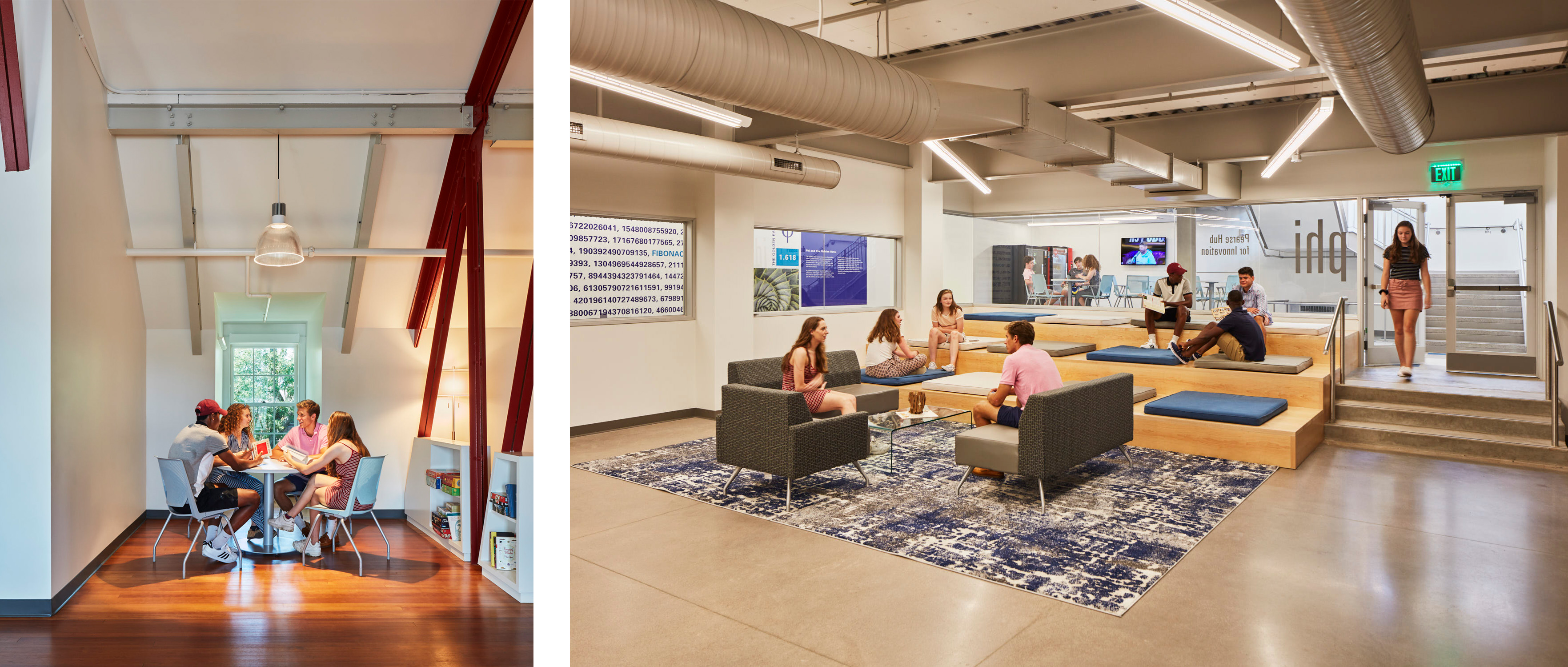
Left: Informal spaces in the renovated mezzanine at Loomis Hall provide casual, non-academic social interaction that is critical for student growth.
Right: A flexible breakout-space within the Pearse Hub for Innovation allows for spontaneous community interaction or more opportunities for formal academic space.
A technology-enabled breakout space within the Pearse Hub for Innovation in the Scanlan Campus Center allows for impromptu collaborative work sessions, and can function as overflow space for classes. According to Olshin, comfortable furniture that is moveable, varied in height, and allows both side-by-side and face-to-face arrangements is important for the flexible nature of these spaces. Emphasizing beauty within these breakout spaces through the inclusion of natural light or architectural detailing provides inspiration and encourages students to utilize the spaces.
In striving to foster community in campus buildings, an emphasis should also be placed on making larger, more formalized social spaces beautiful and inviting. Spaces that are specifically programmed to support structured social interactions help to strengthen the relationship between the student and the greater institution, and serve to define the essence of the campus experience. As Liscinsky says, the Dining Hall is more than just a space for eating: “it’s a chance for students to take comfort and be with their friends.” The Dining Hall within the Scanlan Campus Center was designed to be bright and airy, with generous proportions, traditional high vaulted ceilings, and spacious windows. Large, community-oriented spaces such as these lend themselves to easy adaptation: Early in the pandemic, Lance Hall, the Director of Physical Plant, led his team in conceptualizing, constructing, and installing temporary transparent guards along the wooden dining tables, protecting students from airborne pathogens while preserving the social nature of the space in a visually sympathetic way.
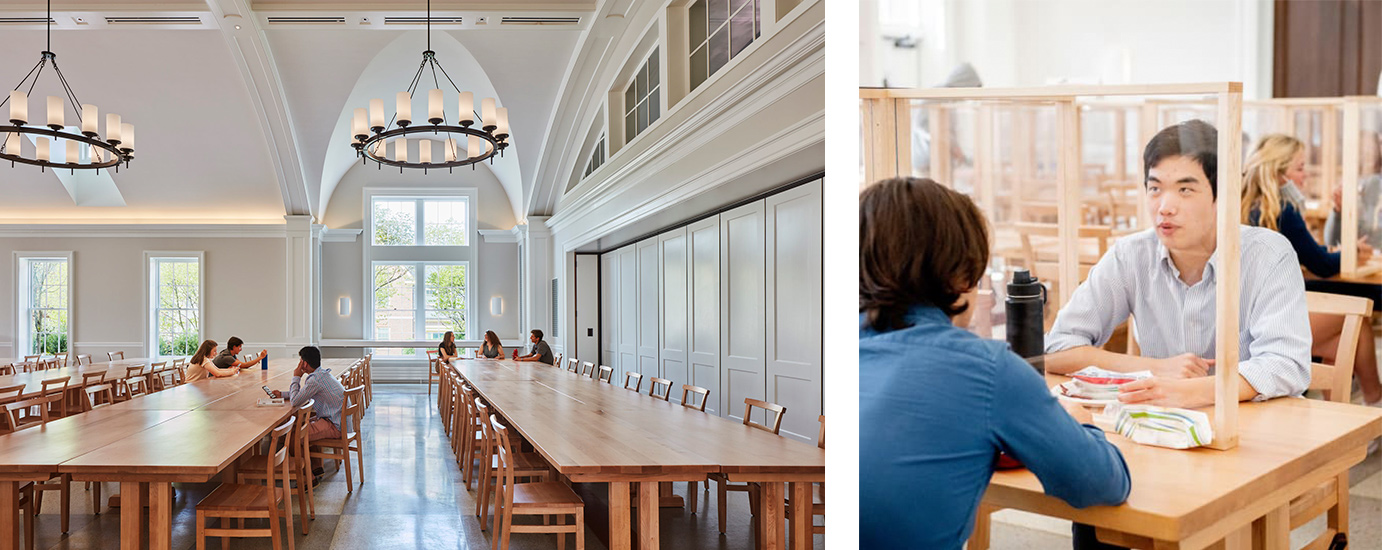
Left: The new Dining Room has large windows providing direct visual connection to the adjacent Rockefeller Quad.
Right: Temporary transparent guards along the long tables allow for safe conversation and interaction. Image via Loomis Chaffee School.
Strengthening Connections with the Outdoors
Comfortable outdoor spaces have long been important to many independent schools, particularly those situated on expansive verdant campuses. The pandemic has reinforced existing knowledge of the importance of access to outdoor space; research indicates that learning outdoors, and even visual connections to the outdoors, improves student focus and creativity and reduces stress levels. Outdoor classrooms, which many schools have experimented with for the first time for social distancing purposes during the pandemic, benefit student focus and creativity, and should be integrated into plans for new school buildings or additions.
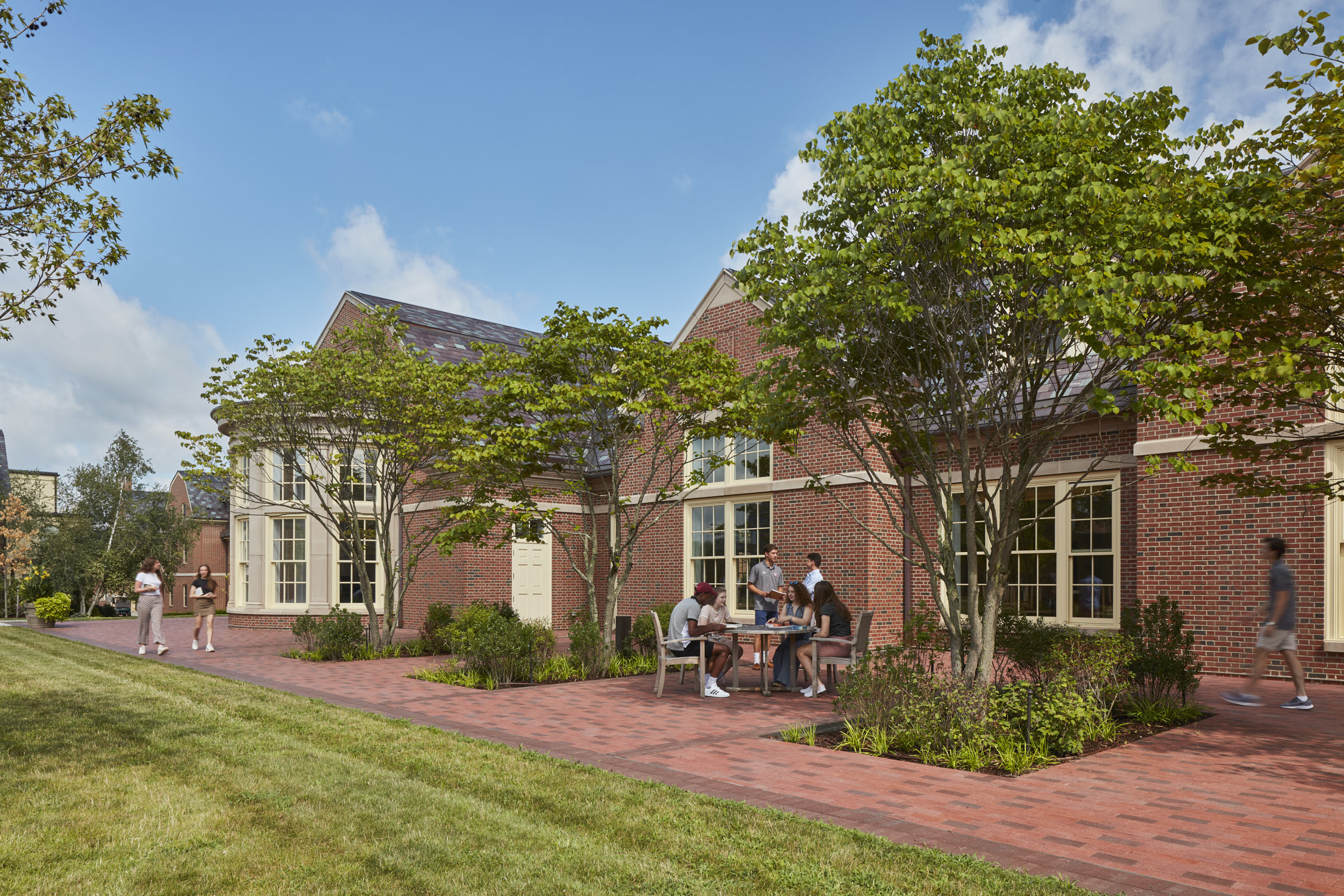
The exterior terrace at the Scanlan Campus Center provides outdoor seating for informal gathering space, with gracious visual connections between the indoors and the outdoors.
The Loomis Chaffee School campus plan focuses on three courtyards, each uniquely sized and oriented toward different types of use. During the initial waves of the pandemic, administrators at the Loomis Chaffee School dynamically adapted these outdoor spaces, using them to host dorm meetings, theater rehearsals, and other social gatherings typically done indoors. The selection of durable and moveable outdoor furniture located within each courtyard promotes the opportunity for outdoor learning. In addition, Olshin’s design for the Scanlan Campus Center includes an exterior terrace with seating and active spaces. These areas, located next to large windows into the building, allow for visual connection between the indoor and outdoor spaces, and support informal socializing or formal learning in nice weather.
Creating a Sense of Spatial Ownership
For many students, being forced to learn from home created feelings of situational and spatial helplessness. Upon returning to an in-person academic environment anticipated in 2021, it will be important for students to feel a sense of agency and control over their spaces. At the Loomis Chaffee School, achieving a feeling of stability required the school administrators to recognize that they would not initially have all the answers to design student spaces. “I cannot think like a seventeen year old,” Liscinsky says. “What I think is cool, they won’t.” Interviews with Loomis Chaffee students clarified their need for a sense of security and comfort within the school’s physical environment, conditions that should be integrated into all new buildings and renovations.
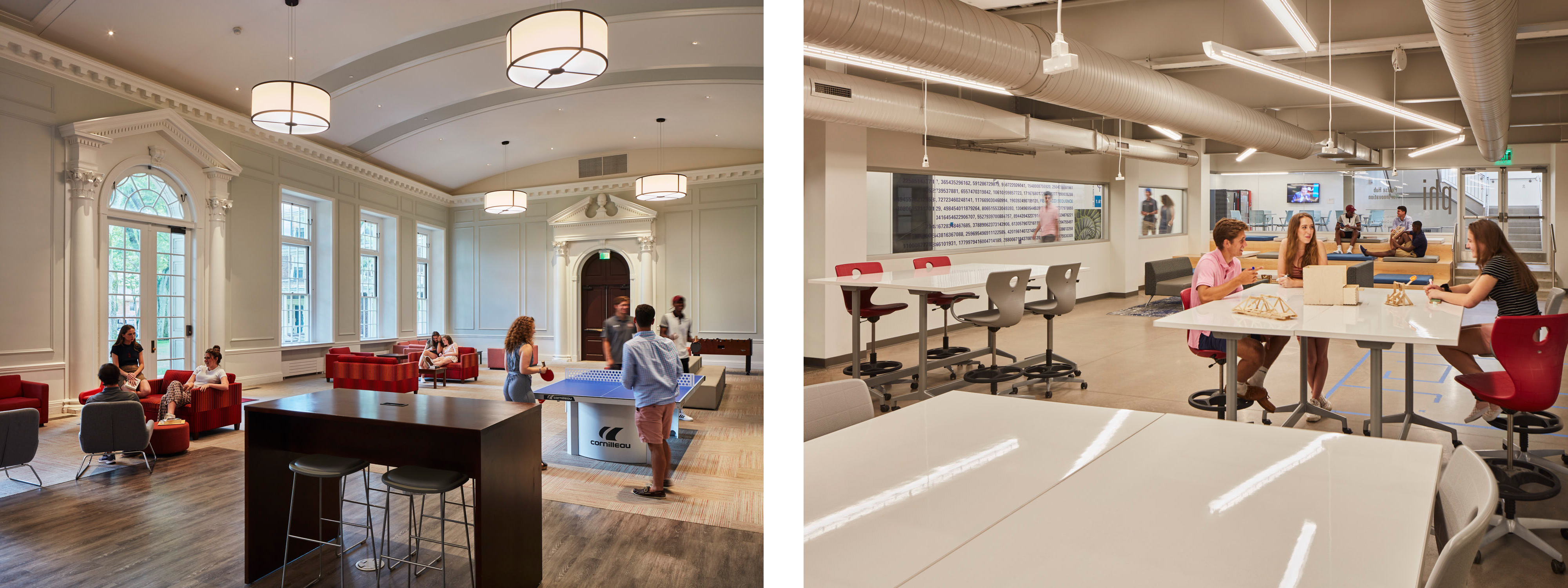
Left: Lounge space with no specific predefined uses allows students to make the space their own.
Right: The Pearse Hub for Innovation contains flexible furniture such as movable seating and tables with various heights, allowing students and faculty to adapt the space for how they learn best.
Toward the beginning of the first wave of lockdowns, administrators at the Loomis Chaffee School installed a series of large tents in the outdoor spaces surrounding the Scanlan Campus Center and around the campus. In addition to providing more socially-distant areas for classes to safely be held, these tents allowed students to more easily make their educational space their own. According to Liscinsky, blank-canvas areas like these allow administrators to develop a framework for how the spaces are intended to be used, then have students “buy into it and make it better.” This mindset should persist once students return to full capacity in-person learning. Large spaces with no predefined use, such as lounges or black box spaces, can allow students to uniquely determine how to use the spaces themselves. The inclusion of a variety of surfaces, flexible and lightweight furniture, and even moveable walls all can be used in creative and unconventional ways by students, providing them with a genuine feeling of belonging.
Lessons Learned for Independent Schools
An architectural sense of place is an element that many independent schools can achieve by offering a variety of traditional and contemporary spaces, with both formal and flexible social areas, a close connection to the outdoors, and an intent for students to make spaces their own. When students eventually return to safe physical school environments and administrators can begin the process of community healing, the unique buildings and campuses that compose many independent schools should be embraced among the strategies for restoring student growth and development.