Resilience Thinking
Over the past few months, COVID-19 has forced a genuine reckoning about our capacity to maintain essential functions at home, in the workplace, and in our institutions, while we absorb the myriad of disruptions presented by the pandemic.
All of us have begun to identify needs that are mission-critical, and to question those that are perhaps less so, such as the necessity of in-person meetings, frequent business travel, and daily commutes. Reliability, redundancy, flexibility, and responsiveness have become increasingly important measures of how our buildings and cities support our lives, livelihoods, and community interactions.
Pandemics are among the unanticipated “shock events,” like natural disasters and extreme weather, that resilient design and planning attempt to address. Resiliency is a critical dimension of sustainable design, and is bolstered by many of the same measures that prioritize efficient and affordable operations and reduced carbon footprints in both new buildings and major renovation projects.
The effects of climate change are also disproportionately impacting Black, Native American, and other minority communities, particularly those with limited resources. It is our role as designers of the built environment to stand in solidarity with these groups, to listen and learn from them, and to advance the work of creating a built environment that is sustainable and equitable.
Resilient design that anticipates and is responsive to uncertainty places our clients in a position of strength. It enables new and existing buildings to better serve the institutions and communities they are a part of, for generations to come.
We are currently talking to our clients about resilience and sustainable design strategies that support stronger buildings and communities, and considering the following questions:
• How can low and no-cost passive design strategies like daylighting, controlled solar gain, and natural ventilation not only reduce energy use and emissions, but allow facilities to remain safe, operable, and comfortable during power interruptions or pandemics?
• How can we better design and/or adapt communal spaces to address reduced attendance or variable occupancies? To facilitate interpersonal interaction without close contact? To accommodate events and gatherings indoors, and especially outdoors?

The courtyard at the North Philadelphia Law Center provides all spaces with access to controlled daylighting and natural ventilation, minimizing the building's reliance on artificial light and mechanical cooling.
• How do buildings that are part of transit-connected, walkable urban developments work to improve access and equity? How can generously designed public outdoor spaces and visually transparent, welcoming buildings better serve the needs of communities that include marginalized or underserved groups?
• How should spaces of learning better prepare for increased digitization? To accommodate a hybridization of in-person and virtual gatherings? What are the consequences and opportunities of increased digitization, on staffing, technological and space needs? How can online platforms or hybrid virtual and in-person events enhance community and improve access to programs, collections, and learning?
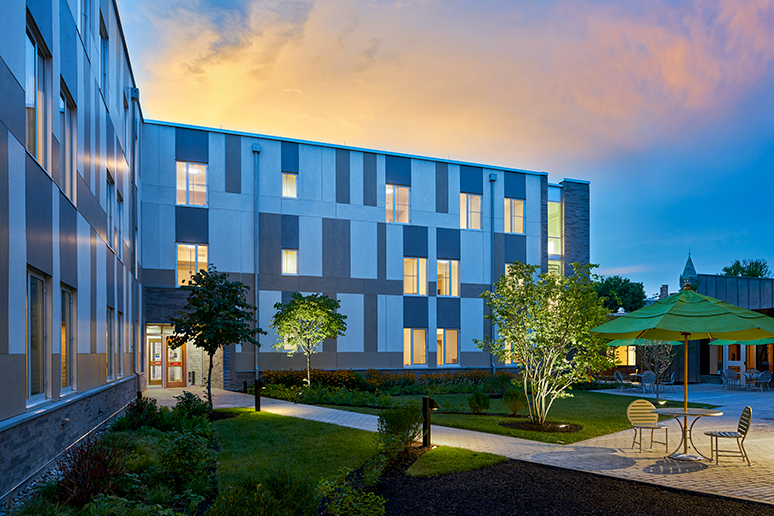
At the New Residence Hall at Bryn Mawr College, daylit common spaces and a well-appointed courtyard provide healthy and flexible spaces for social interaction.
• In which ways can buildings be made to feel safe, accessible, and reassuring upon being re-occupied, while simultaneously accommodating required safety checks?
• How can buildings and spaces be designed for greater flexibility in the near term and inevitable changes in use in the future? To maximize facility lifespan and minimize the carbon emissions and costs associated with repeated renovation cycles?
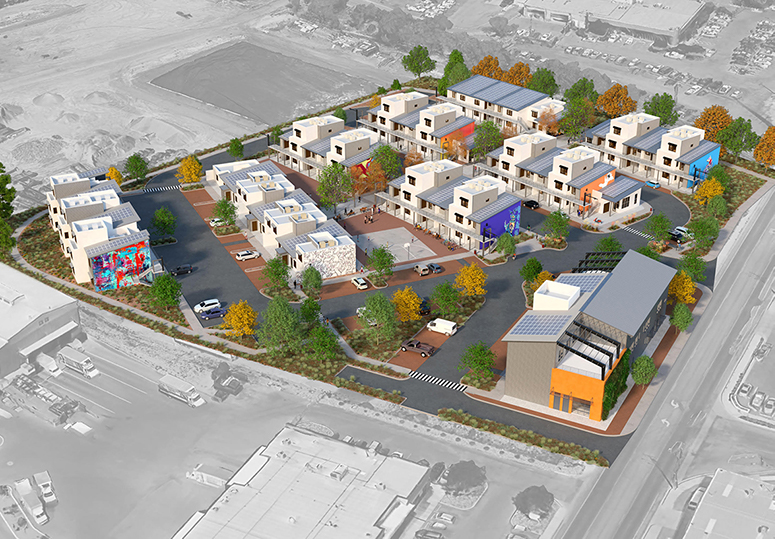
The Siler Yard Arts + Creativity Center will provide much needed affordable live/work housing for members of Santa Fe’s creative community. Designed to a net-zero standard, efficient mechanical equipment combined with onsite renewable energy production from rooftop photovoltaic panels will significantly reduce utility costs for low-income residents.
• How can more considered approaches to shorter supply chains and low-carbon, renewable building materials promote resilience at the community scale, and support local labor and regional manufacturing?
• How do we use predictive models to design for the impacts of climate change over the life of a building? To address higher temperatures and more extreme weather events? How can we prepare for the unexpected?
These critical questions will guide us as we continue to work with our clients to design lasting places that are safe, healthy, and supportive for those who use them.
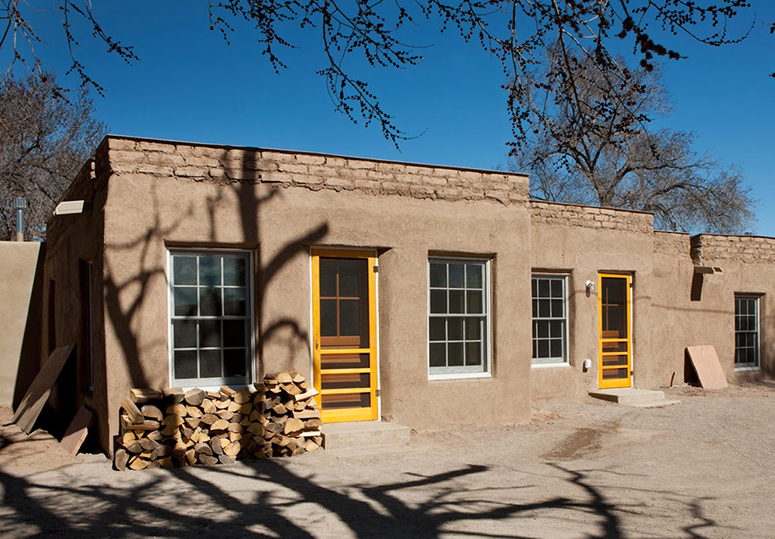
At Ohkay Owingeh, new and renovated homes in the pueblo incorporate locally sourced materials and traditional construction techniques like adobe and mud plaster, supporting local labor and strengthening settlement patterns and cultural activities that are centuries old.